Quick Answer:
Aspen is a modern English unisex name taken from the word for the aspen tree, a deciduous tree in the genus Populus. The name is associated with nature, freshness, and the distinctive beauty of aspen trees.
The aspen name meaning comes directly from the English word for the aspen tree. As a given name, Aspen belongs to the modern tradition of nature-inspired names and works comfortably for both boys and girls. This article covers its meaning, linguistic origin, history, pronunciation, related forms, cultural associations, examples, and notable people who carry the name.
Aspen has a clean, natural sound without being difficult to pronounce. Its connection with a recognizable tree gives it an immediate visual quality, while its use as a place name, particularly through Aspen, Colorado, adds another layer of modern cultural recognition.
Key Facts Box
| Fact | Details |
|---|---|
| Gender | Unisex — used for both boys and girls |
| Meaning | Aspen tree |
| Origin | English |
| Root | Old English æspe |
| Pronunciation | AS-pən |
| Name Type | Nature / tree name |
| Variant | Aspyn |
What Is Aspen?
Aspen is an English given name derived from the common English word aspen, the name of several deciduous trees in the genus Populus. As a personal name, it is classified as modern English and is used for both males and females.
The name belongs to the same broad family of nature-based names as Willow, Rowan, Hazel, Ash, and Cedar. Unlike names that began as surnames or traditional personal names, Aspen comes directly from a natural object.
Aspen can also refer to the well-known Colorado mountain city and ski destination. That place association gives the name a distinctly American cultural connection, although the personal name itself comes from the English tree word.
Aspen Name Meaning
The direct meaning of Aspen is “aspen tree.” There is no separate traditional personal-name meaning such as “warrior,” “grace,” or “beloved.” Its meaning comes from the natural object itself.
The Natural Meaning
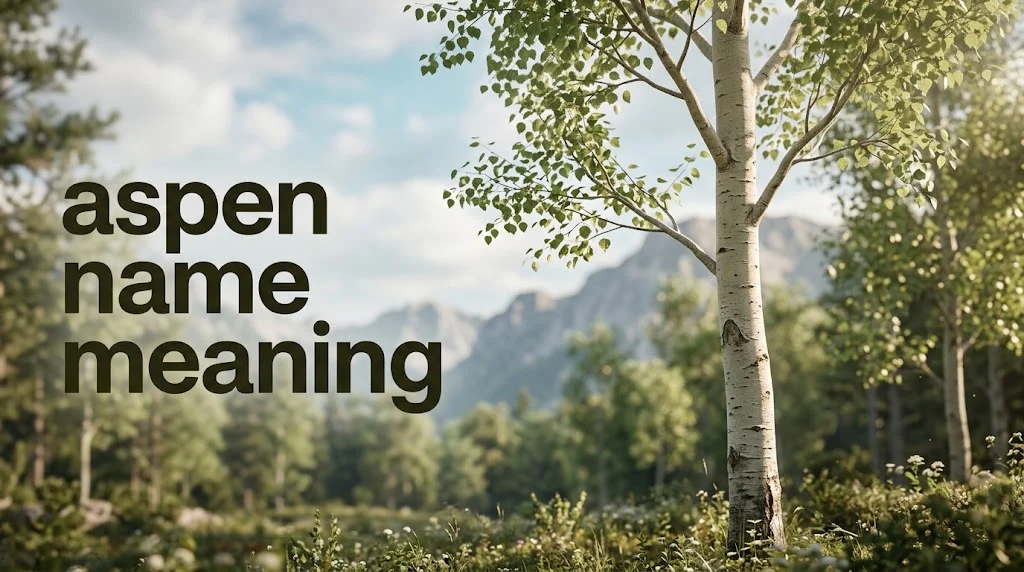
Aspen trees are known for their distinctive leaves and pale trunks. Several species commonly carry the name, including trees within the Populus genus.
Because Aspen comes from the name of a tree, modern parents may associate it with qualities commonly connected with nature: freshness, growth, independence, calmness, and strength. These are modern symbolic associations, not literal dictionary meanings of the name.
A Modern Nature Name
Aspen fits naturally into the growing category of botanical and nature-inspired names. Parents who prefer names connected with forests, plants, landscapes, or the outdoors may find it appealing because it feels contemporary while still having a genuine English vocabulary source.
The name does not require a complicated interpretation. Its strongest identity remains simple: Aspen is the name of a tree used as a personal name.
Origin and Etymology
Aspen has an English origin and ultimately comes from the Old English word æspe, referring to the aspen tree. The modern spelling developed from the historical English tree word rather than from an ancient personal name.
That distinction matters. Aspen did not begin as a traditional medieval given name that later acquired a meaning connected with trees. Instead, English speakers first used the word as a botanical term, and its use as a personal name belongs to the modern naming tradition.
The pronunciation is straightforward: AS-pən, with the first syllable carrying the main stress. The spelling Aspyn also appears as a variant, although Aspen remains the more direct form of the original English word.
History and Cultural Context
The history of Aspen as a word reaches much further back than its history as a popular personal name. Old English æspe supplied the linguistic foundation for the modern English word. The name therefore carries a genuine connection to the older English language rather than being a recently invented combination of sounds.
As a given name, Aspen reflects the modern English preference for vocabulary and nature names. Similar naming patterns have produced names taken from trees, flowers, colors, landscapes, and other elements of the natural world.
The place name Aspen adds a separate cultural association. Aspen, Colorado, is internationally known as a mountain resort, so some people encounter Aspen first as a place rather than as a personal name. That association can give the name an outdoors-oriented, mountain-town character without changing its underlying etymology.
Examples
Aspen works naturally across several naming situations.
- Aspen James — a balanced combination of a nature-based first name and a traditional middle name.
- Aspen Rose — pairs the tree name with another nature-related name.
- Aspen Michael — gives the modern first name a more conventional counterpart.
- Aspen Marie — creates a softer, familiar combination.
- Aspen Lee — a short and simple combination.
In everyday use, the name is easy to recognize and spell. Someone named Aspen might introduce themselves simply as, “Hi, I’m Aspen,” without needing to explain the pronunciation.
The name can suit families looking for a modern unisex choice, especially when they prefer names with a clear connection to the natural world.
Variants and Spellings
The main documented variant of Aspen is Aspyn. It retains the same basic sound and identity while changing the spelling. Behind the Name lists Aspyn as a feminine variant of Aspen.
| Form | Type | Notes |
|---|---|---|
| Aspen | Main form | English nature name used for both genders |
| Aspyn | Variant | Alternative spelling, listed as feminine |
| Aspen | English word | Name of a group of deciduous trees |
| Aspen | Place name | Associated with Aspen, Colorado |
Names such as Ash and Rowan are related in theme because they are also used as tree-inspired given names. They are not linguistic variants of Aspen, though, and each has its own independent origin.
Famous People Named Aspen
Several real people demonstrate the name’s use in modern public life.
- Aspen Ladd — an American mixed martial artist who competed in the UFC’s women’s divisions. UFC records document her professional career and UFC appearances.
- Aspen Matis — an American writer and author of Girl in the Woods and Your Blue Is Not My Blue. Her official biography identifies her as the author of both memoirs.
These examples also show how naturally Aspen functions as a personal name across different professions and contexts.
Aspen vs. Related Terms
| Term | Meaning | How It Differs |
|---|---|---|
| Aspen | A tree name from English | The direct source of the given name |
| Aspyn | Variant of Aspen | Alternative spelling rather than a separate etymology |
| Ash | Ash tree or fire residue | Different tree and independent word origin |
| Rowan | A tree name | Another nature name, but not a variant of Aspen |
| Willow | Name of the willow tree | Similar nature theme with a different botanical source |
| Cedar | Name associated with cedar trees | Another tree-based name with a separate linguistic history |
Frequently Asked Questions
Is Aspen a boy or girl name?
Aspen is a unisex name. Modern English usage includes both boys and girls, so it does not belong exclusively to one gender.
What does the name Aspen mean?
Aspen means “aspen tree.” The meaning comes directly from the English vocabulary word for the tree.
What is the origin of the name Aspen?
Aspen has an English origin and comes from the English word for the aspen tree. That word traces back to Old English æspe.
How do you pronounce Aspen?
Aspen is pronounced AS-pən, with emphasis on the first syllable. It sounds like “AS-puhn.”
Is Aspen a nature name?
Yes. Aspen is a clear nature or tree name because it comes directly from the name of a tree in the Populus genus.
Is Aspyn a different name from Aspen?
Aspyn is generally treated as a variant spelling of Aspen, rather than a completely separate name with a different meaning.
Does Aspen have a religious meaning?
Aspen does not have a specific established religious meaning. Its documented meaning comes from the English word for the tree.
Is Aspen also a place name?
Yes. Aspen is also the name of a well-known mountain resort city in Colorado. This place association is separate from the English tree-based origin of the personal name.
Conclusion
Aspen is a modern English unisex name with a straightforward meaning: “aspen tree.” Its Old English roots, natural imagery, simple pronunciation, and connection with the outdoors give it a distinctive identity without requiring an elaborate interpretation. The variant Aspyn offers another spelling, while Aspen itself remains the clearest form.
