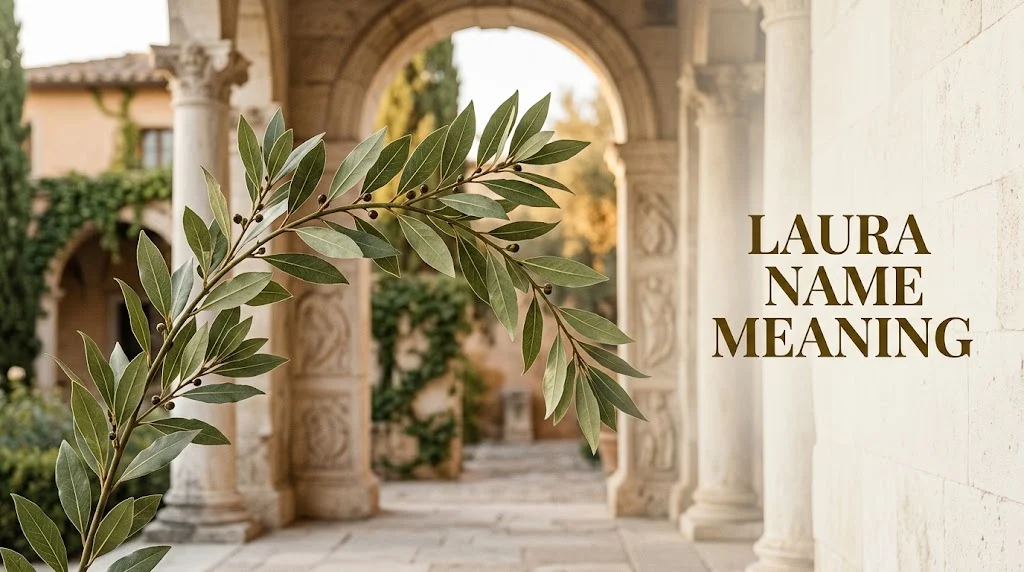
Laura means “laurel” and comes from the Latin word laurus. The laurel carried strong associations with victory, honor, and achievement in the ancient Roman world, giving Laura a long-standing symbolic connection with success and distinction.
The laura name meaning comes from the Latin laurus, meaning “laurel.” Laura developed from an ancient Latin word associated with the laurel tree and later became an established personal name in several European languages. Its history connects classical symbolism, Christian tradition, medieval literature, and modern naming culture.
Laura remains recognizable across English-speaking and continental European cultures. The name also gained literary importance through the poetry of the Italian writer Petrarch, while historical figures such as Saint Laura helped strengthen its presence in Christian Europe.
Key Facts
| Fact | Details |
|---|---|
| Gender | Girl / Feminine |
| Meaning | Laurel |
| Origin | Latin; later used across many European languages |
| Pronunciation | LOW-rah in English |
| Related symbol | Laurel wreath, victory, honor |
| Name type | Traditional feminine given name |
What Is the Name Laura?
Laura is a feminine given name with Latin roots. Its direct linguistic source is laurus, the Latin word for the laurel tree. Ancient Romans associated laurel leaves with honor and victory, particularly through wreaths awarded to victorious or distinguished people.
The name differs from Lauren, even though the two names look and sound related. Laura comes directly from laurus, while Lauren is connected to Laurence/Laurentius and developed through a different naming history.
That distinction matters when discussing name origins. Similar-looking names do not always share the same etymological path.
Laura Name Meaning
The central meaning of Laura is “laurel.” Because the laurel carried symbolic value in classical culture, the name gained associations beyond the literal plant.
Laurel and Victory
In ancient Rome, laurel leaves appeared in victory wreaths and other symbols of distinction. As a result, the laurel became associated with achievement, honor, victory, and recognition.
Laura therefore carries a traditional symbolic meaning that can be expressed as “one associated with victory or honor through the laurel.” That expanded interpretation is symbolic rather than a separate literal translation.
A Classic and Refined Meaning
The botanical meaning gives Laura a natural connection to greenery and the laurel tree, while its classical history gives it a more formal association with achievement.
For parents choosing the name, Laura can therefore suggest a combination of nature, elegance, strength, and distinction without requiring an elaborate interpretation.
Origin and Etymology
Laura traces back to Latin laurus, meaning “laurel.” The Latin word served as the foundation for the personal name and related forms that appeared across different European naming traditions.
The name has a particularly interesting link to Roman culture. Laurel held a respected place in the ancient Mediterranean world, and its leaves formed wreaths connected with victory and distinction.
Laura later appeared in medieval Christian contexts. One notable bearer was Saint Laura, a ninth-century Spanish martyr. Her story helped establish the name beyond its classical linguistic background.
The name also gained lasting literary significance in Italy through Petrarch, whose fourteenth-century poetry repeatedly presented a woman named Laura as its central inspiration.
History and Cultural Context
Laura has a much broader history than its simple four-letter spelling suggests. The name bridges classical Latin, Christian Europe, and medieval Italian literature.
Saint Laura is one important historical figure connected with the name. According to traditional accounts, she was a Spanish nun and martyr associated with ninth-century Córdoba. Her religious legacy gave Laura a place within Christian naming traditions.
Literature added another layer. Petrarch’s poetic Laura became one of the best-known female figures in European literary history. She is traditionally identified with Laura de Noves, although the exact historical relationship between the poetic figure and the real woman remains a subject of scholarly discussion.
By the later medieval and early modern periods, Laura had become established in several European naming traditions. English usage dates back to the 13th century, according to historical name references.
Today, Laura appears in numerous European languages, including Spanish, Italian, Portuguese, French, Romanian, German, Dutch, Polish, Swedish, and others.
Examples of Laura in Use
Laura works naturally as both a traditional and modern first name.
Here are a few realistic examples:
- Laura Elizabeth — a classic two-part combination.
- Laura Marie — a familiar combination in several European and English-speaking naming traditions.
- Laura Sophia — pairs a traditional first name with another widely recognized feminine name.
- Laura is my sister’s name. — a simple everyday usage example.
- Laura chose the name for its connection with the laurel tree. — an example emphasizing its original meaning.
The name also works well with short and long surnames because its two-syllable structure keeps it relatively balanced.
Variants and Spellings
Laura has several genuine related forms, although they do not all function as exact translations.
| Form | Language / Usage | Relationship |
|---|---|---|
| Laura | Many European languages | Main form |
| Laure | French | French form |
| Laurita | Spanish, Portuguese | Diminutive |
| Lauretta | Italian | Diminutive |
| Laurette | French | Diminutive |
| Laurie | English, French | Diminutive of Laura or related names |
| Lora | English | Variant form |
| Laurel | English | Related directly to the laurel plant |
| Lauressa | English | Rare diminutive |
| Lauro | Italian, Spanish, Portuguese | Masculine form related to Laurus |
These forms show how the original Latin root developed differently across languages.
Lauren deserves special care. It is often treated as a close variant of Laura, but its etymological history connects it with Laurence/Laurentius, not simply with Laura.
Famous People Named Laura
Several notable women named Laura have contributed to literature, history, entertainment, and public life.
- Laura Ingalls Wilder — American writer best known for the Little House series, based partly on her childhood experiences in the American Midwest and West.
- Laura Secord — Canadian historical figure remembered for her role during the War of 1812. Her name appears among notable historical bearers of Laura.
- Laura Dern — American actress known for film and television work, including Jurassic Park and Big Little Lies.
- Laura Linney — American actress known for work in film, television, and theatre.
- Laura Bush — American educator and former First Lady of the United States.
These examples show how Laura has remained in use across very different generations and professional fields.
Laura vs. Related Terms
| Term | Meaning | How It Differs |
|---|---|---|
| Laura | Laurel | Direct feminine name from Latin laurus |
| Laurel | Laurel tree | English botanical name that also became a given name |
| Lauren | Related to Laurence/Laurentius | Similar appearance but different etymological development |
| Laurie | Diminutive of Laura or Laurence | Usually a shortened or familiar form |
| Laure | French form of Laura | French-language counterpart |
| Lauro | Form related to Laurus | Masculine form used in Italian, Spanish, and Portuguese |
Frequently Asked Questions
What does the name Laura mean?
Laura means “laurel.” The name comes from the Latin laurus, the word for the laurel tree. Laurel also carried associations with victory and honor in ancient Roman culture.
Is Laura a girl’s name?
Yes. Laura is traditionally a feminine given name. It is widely used as a girl’s name in European languages and English-speaking cultures.
What is the origin of Laura?
Laura has a Latin origin. It derives from laurus, meaning “laurel.” The name later spread into numerous European languages and naming traditions.
How do you pronounce Laura?
In standard English, Laura is commonly pronounced LOW-rah. Pronunciation changes somewhat between languages; for example, Spanish and Italian pronunciation differs from the common English form.
Is Laura the same name as Lauren?
Not exactly. Laura and Lauren are closely associated in modern naming, but their historical origins differ. Laura comes from Latin laurus, while Lauren developed through the Laurence/Laurentius name family.
What names are similar to Laura?
Related or closely associated names include Laure, Laurel, Laurie, Lora, Lauretta, Laurette, Laurita, and Lauren. Some are true variants or diminutives, while others share only part of the broader naming family.
Is Laura a biblical name?
Laura is not a biblical name in origin. Its root is Latin, although Christian history later helped spread the name through figures such as Saint Laura.
What does Laura symbolize?
Laura can symbolize victory, honor, achievement, and distinction because of the ancient association between laurel wreaths and triumph. Its literal meaning remains simply “laurel.”
Conclusion
Laura is a classic feminine name rooted in the Latin laurus, meaning “laurel.” Its association with victory and honor, along with its links to Saint Laura and Petrarch’s poetry, gives the name a rich cultural history. Simple in form yet deeply established across Europe, Laura remains a meaningful choice with a strong classical foundation.
