Quick Answer:
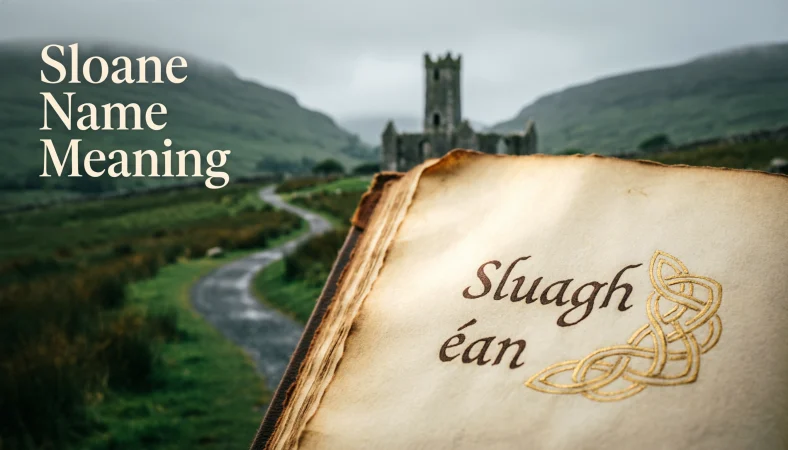
The Sloane name meaning is generally linked to the Irish surname Ó Sluagháin, meaning “descendant of Sluaghán,” with sluagh associated with a “host” or “warrior.” Sloane is now widely used as a modern given name, especially for girls.
Sloane is a distinctive name with an Irish surname heritage and a modern, polished feel. Its history is connected to the Irish surname Ó Sluagháin, traditionally associated with the Gaelic personal name Sluaghadán. Today, Sloane is widely recognized as a given name, particularly in English-speaking naming culture, while retaining the strong character of its surname roots.
The Sloane name meaning is generally traced to Irish surname origins. Sloane developed from the surname Sloan, which is associated with the Gaelic Ó Sluagháin, a patronymic form connected with the personal name Sluagán. Sources differ somewhat in how they translate the underlying Gaelic elements, so interpretations should be presented carefully rather than as a single definitive modern translation.
Today, Sloane is used as a given name and is especially appreciated for its concise sound, surname-style character, and connection to Irish heritage. In this guide, we explore the Sloane name meaning, origin, etymology, pronunciation, history, gender, variations, and cultural context, separating established linguistic information from later symbolic interpretations.
Key Facts About Sloane
| Fact | Details |
|---|---|
| Gender | Unisex, though currently more common for girls |
| Meaning | Descendant of Sluaghán; associated with a warrior or host |
| Origin | Irish / Gaelic |
| Pronunciation | SLOHN |
| Related Forms | Sloan, Slone |
| Name Type | Originally a surname, now used as a given name |
What Is the Sloane Name?
Sloane is a given name with Irish surname roots. It belongs to the broad tradition of surnames that later became personal names.
The name is closely related to Sloan, a spelling that remains in use as both a surname and given name. Sloane adds the final e, giving the name a slightly more polished and modern appearance while retaining the same basic linguistic family.
Today, Sloane is generally treated as a unisex name, although its modern use has leaned strongly toward girls in English-speaking naming culture.
Sloane Name Meaning
The traditional meaning of Sloane connects it to the Irish surname Ó Sluagháin. The prefix Ó historically means “descendant of,” while Sluaghán is a personal name related to the Gaelic word sluagh.
The Gaelic element sluagh can refer to a host, multitude, or army. Because of this connection, explanations of Sloane often use ideas such as “warrior,” “warrior descendant,” or “descendant of Sluaghán.”
Traditional Meaning
The most historically grounded interpretation is “descendant of Sluaghán.” Rather than treating “warrior” as a literal one-word translation, it is more accurate to view warrior imagery as part of the name’s deeper Gaelic association.
That distinction matters because surname etymologies often develop through personal names, family relationships, and older vocabulary rather than through direct dictionary definitions.
Modern Meaning
As a contemporary first name, Sloane often carries a different impression from its historical meaning. Its short form, strong consonants, and surname background give it a modern, confident character.
Parents choosing Sloane may appreciate its Irish roots without necessarily intending the historical “descendant of” meaning literally.
Origin and Etymology of Sloane
Sloane traces its roots to Ireland and the Gaelic language. It is associated with the surname Sloan, which developed from the Irish Ó Sluagháin.
The Gaelic surname structure provides an important clue. Ó means “grandson” or “male descendant of” in traditional Irish naming, while Sluaghán functions as the personal-name element.
The root sluagh appears in Old and Middle Irish vocabulary with meanings connected to a host, army, or group of people. That linguistic connection explains why modern name references frequently associate Sloane with warriors or fighting groups.
Over time, Irish surnames underwent spelling changes as they entered English-language records. Sloane and Sloan emerged as related forms, and the surname later crossed into first-name usage.
History and Cultural Context
Sloane began as part of Irish surname tradition rather than as a traditional standalone first name. Irish surnames frequently recorded ancestry, occupation, location, or descent from an earlier personal name.
The Ó Sluagháin form belongs to this patronymic tradition. A family identified as Ó Sluagháin essentially identified itself through descent from a person named Sluaghán.
As Irish names became established in English-speaking communities, spelling and pronunciation shifted in some records. Sloan became a recognized surname, while Sloane developed as another established spelling.
The movement from surname to first name reflects a broader naming pattern. Families in English-speaking societies have increasingly adopted surnames as given names, particularly when they want a name with historical roots but a modern sound.
Sloane fits that pattern particularly well because it is short, distinctive, and easy to pronounce in English.
Examples of Sloane in Use
Sloane works naturally as a first name in several naming styles.
- Sloane Elizabeth — a modern first name paired with a traditional middle name.
- Sloane Marie — a soft middle name balances Sloane’s sharper sound.
- Sloane James — demonstrates its modern unisex character.
- Sloane Carter — pairs two surname-style names.
- Sloane as a standalone name — simple and distinctive without needing a nickname.
The name can suit both contemporary and surname-inspired naming styles. Its one-syllable structure also makes it easy to combine with longer middle names.
Variants and Spellings
Several forms are connected to Sloane, although they do not all function in exactly the same way.
| Form | Context |
|---|---|
| Sloane | Modern given name and surname spelling |
| Sloan | Established Irish surname and given-name form |
| Slone | Less common spelling found as a surname and occasional given name |
| Ó Sluagháin | Irish Gaelic form associated with the surname’s origin |
Sloan is the closest common variant. In modern first-name use, the two spellings largely share the same pronunciation and historical background.
The spelling Sloane has a distinctly modern visual style, while Sloan looks closer to the established surname form.
Famous People Named Sloane
Several notable people have carried Sloane as a first or given name, particularly in modern American culture.
- Sloane Stephens — American professional tennis player and winner of the 2017 US Open women’s singles title.
- Sloane Morgan Siegel — American actor known for television and film work.
The name also appears frequently in fictional works and popular culture, which has helped make Sloane familiar as a personal name beyond its surname origins.
Sloane vs. Related Terms
| Term | Meaning | How It Differs |
|---|---|---|
| Sloane | Name associated with Ó Sluagháin | Modern spelling commonly used as a given name |
| Sloan | Related Irish surname and given name | Older/common alternative spelling |
| Slone | Variant surname spelling | Less common modern form |
| Ó Sluagháin | Irish Gaelic surname form | Historical linguistic form behind the surname |
| Sluaghán | Personal-name element | Connected to the root of the surname |
Frequently Asked Questions
Is Sloane an Irish name?
Yes. Sloane has Irish Gaelic roots and is connected to the surname Ó Sluagháin. The modern first name developed from this surname tradition.
What does the name Sloane mean?
Sloane is traditionally connected with “descendant of Sluaghán.” Its deeper Gaelic association with sluagh, meaning a host or army, also gives the name its commonly cited warrior connection.
Is Sloane a boy or girl name?
Sloane is technically unisex, but modern usage has made it more common as a girl’s name, particularly in English-speaking countries.
How do you pronounce Sloane?
Sloane has one syllable and rhymes with words such as “phone” and “stone.” The pronunciation is straightforward in standard English.
Is Sloane a surname?
Yes. Sloane has a long history as a surname, especially in connection with Irish family names. Its use as a first name is a later development.
What is the difference between Sloan and Sloane?
The main difference is spelling. Both forms belong to the same broader name family and are generally pronounced alike. Sloan has stronger surname associations, while Sloane is especially familiar as a modern given name.
Is Sloane a biblical name?
No. Sloane is not a biblical name. Its roots are Irish Gaelic and come from surname and personal-name traditions rather than the Bible.
Conclusion
Sloane is a modern given name with genuine Irish Gaelic roots and a strong surname history. Its traditional meaning connects it to “descendant of Sluaghán,” while the underlying sluagh element gives it an association with a host or warrior. Today, Sloane offers a concise, distinctive choice with both historical depth and contemporary appeal.

10 thoughts on “Sloane Name Meaning| The Story Behind This Modern Name For 2026”