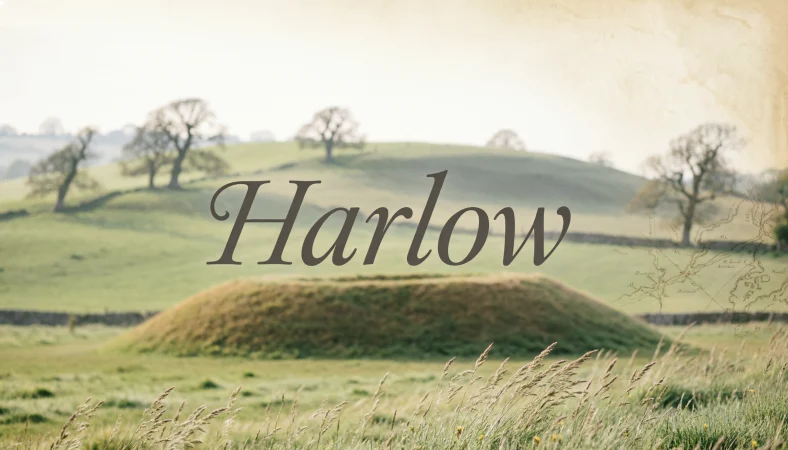
The Harlow name meaning is generally connected to an English place name and surname, with possible Old English roots referring to an army hill or a rocky/stone hill. Harlow is now used as a modern unisex given name, although contemporary usage has made it especially noticeable as a girl’s name in English-speaking countries.
The exact historical meaning is not completely settled because several places called Harlow or similar names may have developed from slightly different Old English elements. The name has an interesting connection to English geography, surnames, and the transition of family names into modern first names.
This guide explains the Harlow meaning, origin, pronunciation, history, gender usage, variations, cultural associations, and common questions about the name.
What Is the Harlow Name?
Harlow is an English given name derived from an English surname and place name. It is traditionally associated with several locations in England, most notably Harlow in Essex. As a first name, Harlow is considered unisex, meaning it can be given to a boy or a girl.
The name has an appealing modern sound while having a much older linguistic background. This combination makes Harlow attractive to parents who like names that feel contemporary but are connected to English history.
Harlow can function as:
- A given name
- A surname
- A place name
- A modern unisex baby name
The surname connection is particularly important. Harlow was not originally created as a modern baby name; it developed from geographical naming traditions and was later adopted as a personal name.
Harlow Name Meaning
The most commonly cited interpretations of the Harlow name meaning are army hill, army mound, and, in some explanations, rock hill or a hill associated with stones.
The difference comes from uncertainty over the first Old English element used in the historical place name. Sources discussing the name connect it with Old English elements such as here, meaning “army,” or hær, associated with rock or a heap of stones, together with hlāw, meaning a hill, mound, or burial mound.
So, rather than treating one translation as absolutely certain, it is more accurate to say that Harlow has multiple related historical interpretations.
Common interpretations of Harlow
| Interpretation | General idea |
|---|---|
| Army hill | A hill or mound associated with an army |
| Army mound | A similar interpretation based on Old English place-name elements |
| Rock hill | A possible interpretation involving rock or a heap of stones |
| Stone/rock mound | Another way of expressing the possible landscape-based meaning |
For a baby-name context, “army hill” is probably the simplest traditional explanation to use, but it should be presented as an interpretation rather than an indisputable literal translation.
The modern use of Harlow does not necessarily imply that a person named Harlow has anything to do with armies, hills, rocks, or warfare. Like many names inherited from surnames and places, its historical meaning and modern personal meaning are different things.
Harlow Name Origin
The Harlow name origin is English, with roots in English place names and Old English.
Harlow is strongly associated with the town of Harlow in Essex, England. The surname Harlow is described as a habitational name, meaning that it originally identified someone who came from a particular place called Harlow. Historical surname sources also identify several other places in England with Harlow-related names.
This is an important part of understanding the name’s development:
Old English elements → place name → surname → given name
That pattern is common in English naming history. A person might originally have been identified by the place they came from. Over generations, the geographical description could become a hereditary surname. Later, surnames began to be adopted as first names, creating modern given names such as Harlow.
What does the Old English connection mean?
One major explanation connects the name with:
- here — “army”
- hlāw — “mound” or “hill”
This produces the commonly cited interpretation “army hill” or “army mound.” Family-name sources specifically identify this interpretation for the Harlow places in Essex and Northumberland.
Other Harlow place names may have developed from hār, associated with “gray” or “hoary,” combined with hlāw. This is why a single, universal translation should be avoided when discussing the historical etymology of every Harlow place name.
Harlow Name History
Harlow’s history is closely connected to English place-name and surname traditions.
The place-name form is centuries old, and historical records show forms of the name such as Herlawe. The surname subsequently appeared in medieval English records. Family-name references identify Harlow as a habitational surname, meaning that it could identify someone who originated from a place carrying the Harlow name.
This gives Harlow an interesting naming journey:
Place → family name → first name
This transition explains why Harlow can sound both traditional and modern at the same time.
Unlike some traditional given names that began as personal names in religious or historical traditions, Harlow’s background is primarily geographical. Its earliest significance is therefore tied to landscape and place rather than a personal virtue or occupation.
Is Harlow a Boy or Girl Name?
Harlow is a unisex name. It can be used for Childrens.
Modern naming patterns have made Harlow particularly recognizable as a girl’s name, but it is not exclusively feminine. Name references classify Harlow as both feminine and masculine and identify its usage as English.
Parents may choose Harlow because it offers several qualities at once:
- It works for either gender.
- It has a simple two-syllable structure.
- It has an English historical background.
- It feels modern without being completely invented.
- It has a recognizable surname-style quality.
The balance between traditional roots and contemporary sound is one reason Harlow fits well with current naming preferences.
How Do You Pronounce Harlow?
Harlow is generally pronounced HAR-loh.
In American English, it is commonly represented approximately as /ˈhɑr.loʊ/, while British English pronunciation is approximately /ˈhɑː.ləʊ/.
Simple pronunciation
Harlow = HAR-low
It has two syllables:
HAR + low
The pronunciation is relatively straightforward, which can be an advantage for parents looking for a name that is distinctive but unlikely to be difficult to say.
Harlow as a Modern Baby Name
Today, Harlow is better known as a given name than many people might expect from its historical background.
The growth of surname-style first names has made names such as Harlow appealing to parents who want something that feels stylish, recognizable, and slightly distinctive.
Harlow also received additional public attention in the late 2000s when celebrity Nicole Richie used the name for her daughter. Name references identify this as an important moment in the modern visibility of Harlow as a girl’s name.
However, it is important not to confuse increased awareness with a specific popularity ranking. Baby-name popularity varies by country and year.
For example, the Office for National Statistics (ONS) publishes official baby-name data for England and Wales, including rankings and counts for Childrens from 1996 through 2025.
Therefore, anyone researching Harlow’s current popularity should check the relevant country’s latest official statistics rather than relying on an old ranking.
Harlow as a Surname
Before becoming a modern first name, Harlow was used as a surname.
The surname is generally classified as a habitational surname, meaning it was associated with people who came from a location named Harlow. Family-history sources identify Harlow locations in places including Essex, Staffordshire, Yorkshire, and Northumberland.
This geographical background is significant because English surnames were often formed from:
- Places
- Occupations
- Personal names
- Descriptive characteristics
- Relationships or ancestry
Harlow belongs primarily to the place-based category.
The surname therefore provides a historical bridge between the modern first name and England’s older system of identifying people according to where they lived or originated.
Harlow vs Harlowe vs Harlo
Harlow has a few spelling variations and visually similar forms.
| Name | Description |
|---|---|
| Harlow | Standard and most recognizable spelling |
| Harlowe | Variant spelling with a decorative final “e” |
| Harlo | Shorter spelling sometimes used as a variation |
| Harley | Similar-looking/sounding English name, but a separate name |
Harlow
Harlow is the most established spelling and directly reflects the English place and surname tradition.
Harlowe
Harlowe gives the name a slightly more elaborate appearance while retaining essentially the same pronunciation for many speakers. It is best viewed as a spelling variant rather than a completely different name.
Harlo
Harlo is a shorter modern spelling. Choosing it may make the name look more contemporary, although Harlow has the stronger connection to the historical place and surname.
Harley
Harley can look or sound somewhat similar to Harlow, but the two names should not be treated as identical. Harley has its own surname and place-name history.
What Does Harlow Symbolize?
A name’s historical etymology is different from its symbolic interpretation. The Old English roots do not mean that every person named Harlow is expected to possess particular personality traits.
Still, parents often associate the name with ideas suggested by its traditional interpretations.
Because one major explanation connects Harlow with an army hill, it can evoke ideas such as:
- Strength
- Courage
- Resilience
- Stability
- Endurance
- A strong connection to the land
The landscape interpretation can also suggest nature, hills, earth, and permanence.
These are modern symbolic associations, not literal definitions of the name.
Why Parents May Choose the Name Harlow
Harlow can appeal to parents for several practical and stylistic reasons.
It is distinctive without being extremely complicated
Harlow has an unusual enough sound to stand out, but its spelling is simple.
It has historical roots
Rather than being a recently invented combination of sounds, Harlow has a documented connection to English places and surnames.
It is unisex
Parents who prefer gender-neutral or gender-flexible names may appreciate Harlow.
It has a modern sound
The two-syllable structure and surname style give Harlow a contemporary feel.
It has several nickname possibilities
Depending on personal preference, possible informal forms include:
- Har
- Harl
- Lo
- Low
Not every person named Harlow will use a nickname, and these are informal possibilities rather than established traditional diminutives.
Harlow Name Personality: What Does It Suggest?
There is no scientifically established personality profile associated with a first name. A person’s character develops through many factors, including family, environment, experiences, and individual choices.
However, when people describe the style or feeling of Harlow, they may see it as:
- Modern
- Strong
- Elegant
- Unisex
- Independent
- Stylish
- Nature-connected
- Surname-inspired
These descriptions reflect cultural impressions rather than proven personality characteristics.
Famous Associations With Harlow
One of the best-known historical associations is Jean Harlow, the American actress whose career made the surname widely recognizable in popular culture.
There is also a modern celebrity connection through Nicole Richie’s daughter, which helped bring Harlow additional attention as a contemporary first name.
These associations are useful for understanding the name’s cultural visibility, but they do not determine its meaning or origin.
Is Harlow a Good Name?
Whether Harlow is a good name depends on personal taste, family preferences, pronunciation, and cultural context.
It may be a strong choice if you want a name that is:
- English in origin
- Historically connected to a place
- Unisex
- Easy to pronounce
- Modern-sounding
- Distinctive without being difficult to spell
It may be less suitable if you prefer very traditional biblical, classical, or strongly gender-specific names.
For parents considering Harlow, one useful approach is to say the full name aloud with the family surname. This helps you judge the rhythm and pronunciation rather than considering the first name in isolation.
Harlow Name Meaning at a Glance
| Attribute | Harlow |
|---|---|
| Origin | English |
| Name type | Given name, surname, place name |
| Gender | Unisex |
| Common pronunciation | HAR-low |
| Main traditional interpretation | Army hill / army mound |
| Other possible interpretation | Rock or stone hill/mound |
| Language background | Old English |
| Historical connection | English place names |
| Style | Modern, surname-inspired |
| Variant spellings | Harlowe, Harlo |
| Best known use today | Contemporary given name |
The exact etymology deserves a small qualification: different Harlow place names may have different historical roots, so “army hill” is a commonly cited interpretation rather than an unquestionable translation for every occurrence of the name.
FAQs
What does Harlow mean?
Harlow is generally associated with “army hill” or “rocky hill,” based on its Old English roots.
What is the origin of Harlow?
Harlow has English and Old English origins and was originally used as a place-name.
Is Harlow a girl’s name?
Harlow is commonly used as a girl’s name today, although names can be used more broadly.
How do you pronounce Harlow?
Harlow is pronounced HAR-loh.
Is Harlow a biblical name?
No, Harlow is not a biblical name. It has English rather than biblical origins.
Is Harlow a rare name?
Harlow is relatively uncommon but recognizable, giving it a modern and distinctive feel.
What names are similar to Harlow?
Similar names include Harper, Marlowe, Willow, Hadley, and Harley.
Is Harlow a good name?
Yes. Harlow has a modern, stylish, and distinctive sound while retaining an old English heritage.
Final Thoughts
The Harlow name meaning combines an old English geographical history with modern naming style. Its strongest historical interpretation connects the name with an army hill or mound, while other Harlow place names may have roots associated with rock, stones, or a gray/hoary hill.
Harlow developed from English place-name traditions into a surname and eventually into a modern given name. Today, it is used as a unisex name, with particularly visible contemporary use for girls.
Its combination of English heritage, simple pronunciation, surname character, and modern appeal makes Harlow an interesting choice for parents looking for a name with both history and a contemporary feel.

12 thoughts on “Harlow Name Meaning| A Complete Guide for Parents For 2026”